People searching for the text “tsunaihaiya“ are arriving at this page. Tsunaihaiya appears in multiple databases such as social media platforms, online searches, and travel blogs, however no one has decided what exactly it means yet.
Tsunaihaiya can refer to a jewelry company that is based in Japan and is very difficult to locate on the internet. It can also be used by individuals to connect with others online, or by various authors about different travel destinations, especially those that are green or eco-friendly.
We are creating a comprehensive guide that will define and help establish all the meanings for the word. With this information you should be able to identify where the word originated from, what it means as well as the importance of it.
What Is Tsunaihaiya?
Tsunaihaiya refers to a made up word that represents the intersection of language, culture, art and modern digital communication. Each individual that uses this word is applying a combination of their own background and experiences – as a consequence there are innumerable definitions and interpretations for each individual who uses this word.
There are three distinct ways to understand Tsunaihaiya:
- Tsunaihaiya (ツナイハイヤ) is a real-life Japanese brand of hand-crafted jewelry, which fuses elements of Apache native culture with precision metal craftsmanship.
- As a Viral Digital Term – The term Tsunaihaiya can be found online on websites like TikTok and Twitter, where users indicate their desire to connect, have emotional connection, and share values related to creativity.
- As an Eco-Tourism Concept – There are many references in literary works of the Tsunaihaiya concept being applied to a perfect beach destination that means pure tourism and authentic people.
All three concepts will be studied in details below.
Tsunaihaiya Jewelry Brand: Heritage, Craft, and Symbolism
The Formation of the Brand
Tsunaihaiya jewelry is a brand which was conceived with a vision that is outside the fashion world — that of combining two entirely different cultural traditions into one cohesive and meaningful form of art. Tsunaihaiya draws inspiration from Indigenous American Apache art and interprets that through the lens of Japanese simplistic craftsmanship.
The idea for this brand first came to Craig Dan Goseyun, who had the idea of starting a brand that would celebrate Indigenous craftsmanship, while also being reflective of modern culture. Yusuke Kuwano has brought this vision to fruition through his incredible craftsmanship, and his intuitive knowledge of symbolism.
What is Special About Tsunaihaiya Jewelry??
Every piece of Tsunaihaiya jewelry tells a story and provides more than just decoration on one‘s body. The company uses distinct symbolic designs, each with a very rich cultural connection, to represent the stories being told:
| Symbol | Meaning | Technique Used |
|---|---|---|
| Turquoise | Protection and inner balance | Hand-set stone placement |
| Silver | Clarity, strength, and resilience | Traditional Japanese metalworking |
| Feather | Spiritual freedom and guidance | Hand-engraving |
| Arrow | Purpose, direction, and focus | Shaping and detailed finishing |
| Rising Sun | Renewal, hope, and new beginnings | Reticulation surface technique |
The concept is intentionally simplistic. There are no distractions or too much decoration – the essence of the jewelry comes out clearly, letting its personal and cultural stories emerge naturally.
The Reticulation Technique Explained
One of the trademarks of Tsunaihaiya jewelry is that of using the traditional technique known as Reticulation. Here’s how it works:
- The thin silver plate is heated multiple times with a torch
- Multiple heating results in oxidation of silver accumulating on the surface
- Additional heating creates organic-looking net or wave patterns on the surface
As the entire procedure is entirely handmade and random in nature, each and every product is a unique piece. That is why the items by Tsunaihaiya have such high collectibility value, as ordering an exact ring for the second time would never result in an identical item.
Notable information: the products of Tsunaihaiya are no longer produced. Existing ones can be bought on select Japanese platforms with limited inventory.
Tsunaihaiya in Digital Culture: How a Word Goes Viral
How Tsunaihaiya Spread Online
Tsunaihaiya has become a trend for a reason; its story from being a niche jewelry brand to the popular internet phenomenon serves as a great example of how language evolves online.
First appearing in some online circles, where people may appreciate the beauty of a new term and enjoy its sound, Tsunaihaiya then reached TikTok and Twitter due to popular challenges and the creative use of the term by individuals and the community.
One of the reasons why this term is unique in terms of its usage on the web is that the community played an active role in developing the meaning of the word. As such, Tsunaihaiya was not only repeated but was also transformed into a concept with deep cultural roots.
Usage of Tsunaihaiya on Social Media Platforms
Today, the term is used to represent the following concepts:
- As a reflection of personal creativity
- As a sign of emotional connection
- As a tool for demonstrating one’s aesthetics
- As an illustration of heritage and artistry
>>>>>>>According to linguists, Tsunaihaiya should be considered not only because of its uniqueness as a trending term but because of the way it developed and evolved in less than a year.
Tsunaihaiya as an Eco-Tourism Concept
What is the Concept of the Destination?
In addition to jewelry and digital fashion, Tsunaihaiya has also emerged as the name given to the idea of a destination which embraces sustainable, authentic, and environmentally responsible
As applied to destinations, Tsunaihaiya refers to an attitude toward travel destinations more so than an actual place
Specifically, Tsunaihaiya refers to a destination which:
- Is located away from heavily trafficked tourist paths
- Has preserved coastal or forest scenery
- Promotes community support as opposed to exploitation
- Adheres to environmentally sound activities like reduction in plastic waste and reliance on renewable energy
- Provides opportunities for immersive cultural experiences as opposed to pre-planned shows
The Core Values Tsunaihaiya Represents in Travel
>>>>Tsunaihaiya can either refer to an actual place of travel or a general concept for traveling responsibly. Whatever the case may be, Tsunaihaiya travels revolve around the following four pillars:
1. Environmental Sustainability Travel that benefits the environment as opposed to exploiting its resources. Examples include beach cleaning, tree planting, wildlife preservation, and sustainable accommodation.
2. Cultural Authenticity Immerse yourself in actual local culture, traditions, music, festivals, and food instead of fabricated experiences tailored to tourists.
3. Biodiversity Protection Preservation Conserve coral reefs, ancient forests, secluded waterfalls, and natural habitats for wildlife.
4. Community-First Tourism Gaining access to the ethical, fair and just economic value derived from tourism by local communities as opposed to large multinational corporations.
Apache Heritage Connection: What Is Its Significance
The culture of Tsunaihaiya cannot be completely understood without considering its historical connections to Apache native American culture. In Apache Native American culture, the imagery associated with the jewelry created in Tsunaihaiya has deep cultural significance.
- Feathers have spiritual implications. They represent a person‘s ability to connect spiritually with forces beyond what is perceived physically.
- Arrows carry the attributes of direction, protection and intention.
- Turquoise is one of the most sacred stones in Native American culture. It represents the sky above and the waters below, serving as a balance between these two elements.
By blending these symbols with Japanese metalworking craftsmanship, Tsunaihaiya has created a unique form of intercultural art. It reflects a harmonious fusion where both cultures are honored without diminishing either one.
More importantly, this example offers a valuable lesson: when cultural traditions are preserved, respected, and expressed with integrity and creativity, they remain meaningful and relevant in both present and future societies.
Tsunaihaiya vs. Similar Concepts: A Clear Comparison
| Feature | Tsunaihaiya | Typical Viral Words | Standard Jewelry Brands |
|---|---|---|---|
| Cultural Depth | Very High | Low | Varies |
| Multiple Meanings | Yes | Rarely | No |
| Artisan Craftsmanship | Yes — fully handmade | N/A | Usually mass-produced |
| Heritage Connection | Apache + Japanese | N/A | Varies |
| Environmental Values | Yes | No | Rarely |
| Long-Term Relevance | High | Short-lived | Varies |
Frequently Asked Questions About Tsunaihaiya
How do you pronounce Tsunaihaiya?
>Pronounced as tsoo–nyeh-hai-yah – a four syllable word with a smooth flowing rhythm, (like “tts” in the word misunderstanding) this brand name has a calm and deliberate nature which reflects it‘s Japanese roots in the way it sounds when you say it out loud.
Is Tsunaihaiya a real place?
Tsunaihaiya is not an actual geographical place. The term was created as part of a jewelry brand, a digital cultural reference, and an eco-tourism concept or ideal. It may also be used by some authors to describe a type of location; however, it does not refer to or identify any specific real-world place.
Where can I buy Tsunaihaiya jewelry?
The brand Tsunaihaiya no longer produce products and has ended it‘s production run. Some limited pieces may have been >included on Japanese online retail sites such as its12midnight.com. To find original products check eBay and other secondhand marketplaces that specialize in clothing from Japan.
What makes Tsunaihaiya popular?
Various reasons make Tsunaihaiya have longevity on the internet:
- It has an unique sound that is easy to remember and pronounce.
- It has many meanings that apply in various social circles.
- It evokes the concepts of heritage, identity, and sustainability that are relevant at the moment.
- It is versatile and can be used in creative space.
- es while maintaining its significance.
Does Tsunaihaiya have anything to do with the Apache language?
No. Tsunaihaiya is a coined word influenced by the Apache culture but not a translation of a word from the Apache language. The creators of the brand created the name to symbolize cultural integration and emotional connections.
What is the Japanese meaning of Tsunaihaiya?
There is no specific meaning for ツナイハイヤ in the Japanese language since it is a brand name that means nothing in the dictionary. The word “tsunai” has something to do with tying or linking, and “haiya” gives it some phonetic strength.
Why Tsunaihaiya Is More Than Just a Trend
Most viral words disappear within weeks. Tsunaihaiya has not — and the reason is that it operates on multiple levels simultaneously.
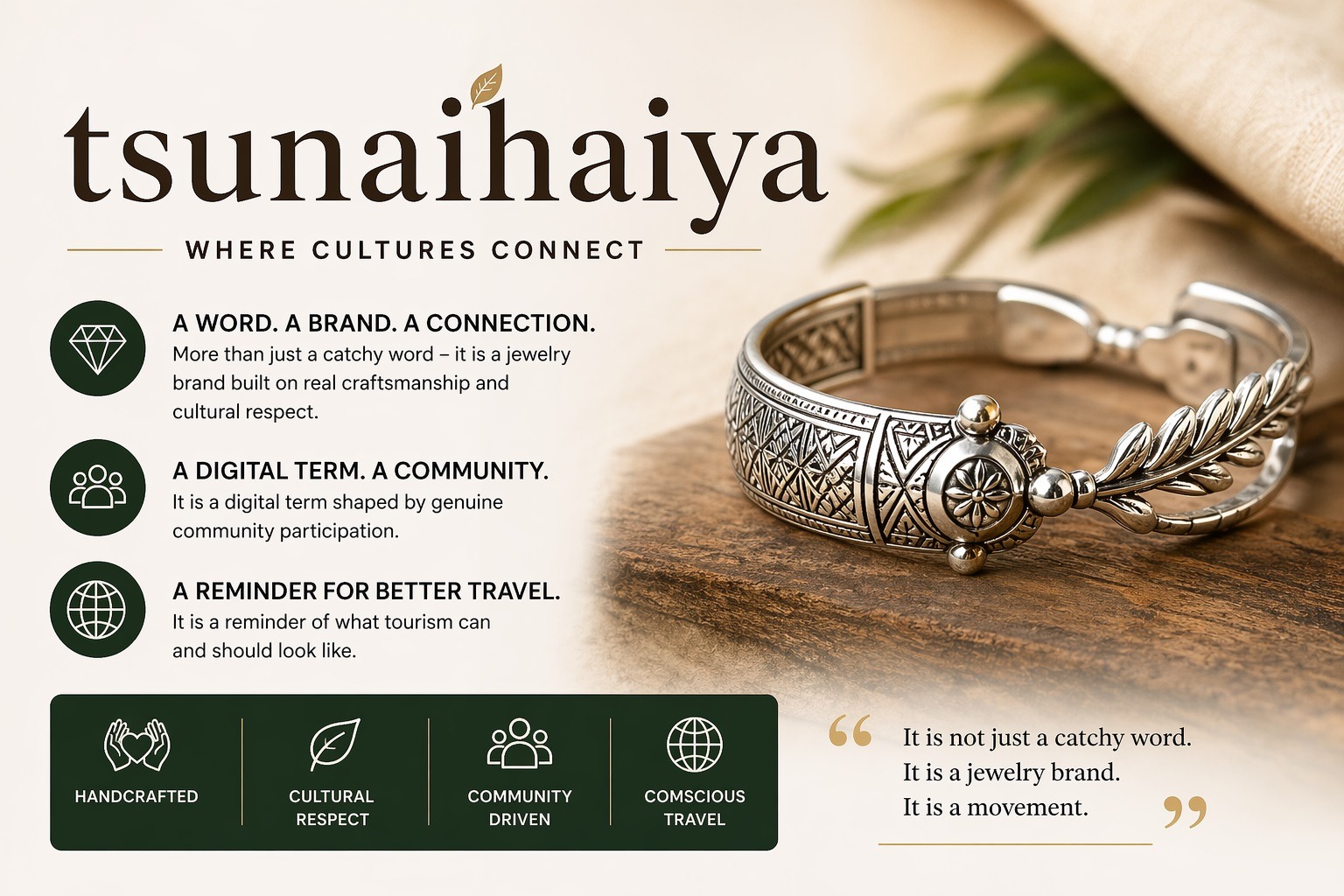
This is more than just a catchy word — it represents a jewelry brand rooted in real craftsmanship and cultural respect. Beyond that, it has evolved into a digital term shaped by genuine community participation. And it is a travel philosophy that speaks to growing demand for meaningful, responsible experiences.
Final Thoughts
Tsunaihaiya has a very personal meaning for each person that comes across it. It could refer to a unique, handmade silver jewelry piece for collectors—something that embodies the shared history between two civilizations. A social media enthusiast would perceive it as a feeling that no language could ever convey — genuine connectedness. And to a mindful tourist, this word is synonymous with how tourism must evolve.
However one got to know about this particular word, there is a common theme here, which links all these definitions together. Tsunaihaiya is about being connected, with your roots, with nature, with other people, and also with that very part of yourself that gets forgotten in today’s hectic environment.